Brake Pads
Ceramic and semi-metallic brake pads matched by OE number.
Brake Pads Products
2 products in this category.
Ceramic Front Brake Pads 044650K070 Toyota
04465-04030
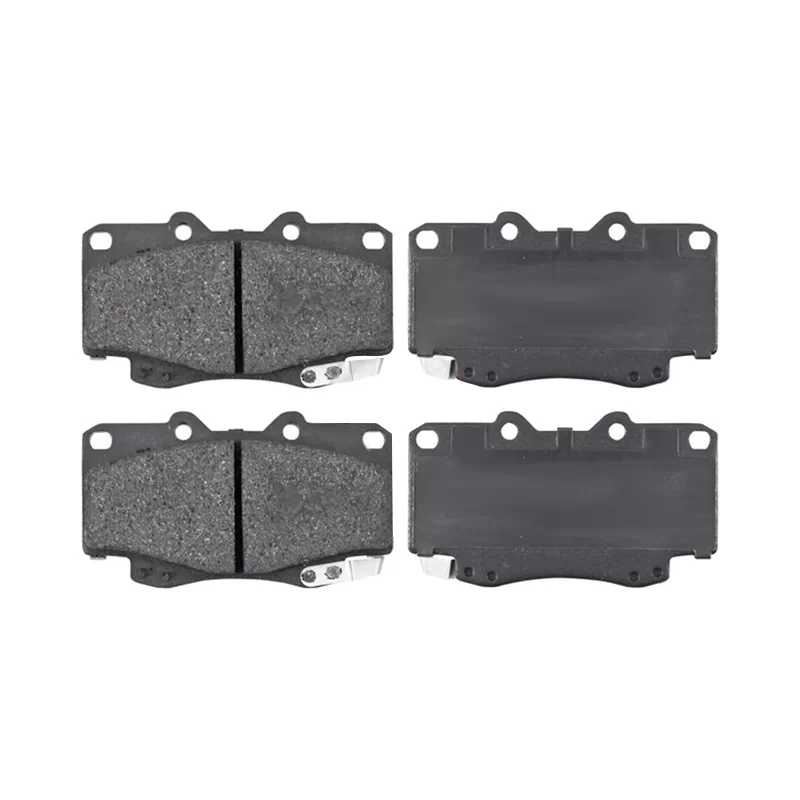
Ceramic front brake pads matched to OE 04465-04030 / 04465-0K020 for Toyota platforms. Friction formulation, backing-plate fit and the completeness of the noise/hardware kit determine pedal feel, disc life and return rate, so set contents are confirmed per application.
Ceramic Front Brake Pads 04465-0K020 04465-04030 04465-
04465-0K020
Ceramic front brake pads matched to OE 04465-0K020 / 04465-04030 / 04465-0K070 for Toyota. The friction material and the included shims, springs and anti-rattle clips are confirmed per application, since a pad that ships without its hardware kit generates returns.
Buyer's guide: sourcing brake padss
Brake pads are the highest-safety consumable on the vehicle, so the sourcing decision turns on friction formulation and hardware completeness more than on unit price. A ceramic pad trades a little initial bite for quieter, lower-dust operation and gentler rotor wear, while a semi-metallic pad delivers stronger cold bite and heat tolerance at the cost of more dust and rotor wear — the right choice depends on the driving profile of the market you serve.
For importers and private-label programs, the checklist is the backing-plate fit, the chamfer and slot pattern, and whether the noise-reduction shims, springs and anti-rattle clips are included in the box. A pad that fits the caliper but ships without the hardware kit generates returns and workshop complaints, so confirm the full set contents per OE number.
Our advice to buyers is to quote the OE or cross-reference number and match the friction material to the application — ceramic for the premium urban/SUV segment, semi-metallic for fleets and heavier vehicles — rather than mixing on price alone.
- Premium / urban segment: ceramic for quiet, low-dust operation and longer rotor life.
- Fleet / heavy vehicles: semi-metallic for cold bite and heat tolerance.
- Always confirm the noise/hardware kit is included per OE to avoid returns.
What you should know about brake padss
Ceramic and semi-metallic pads differ mainly in how they manage heat and noise. Ceramic compounds use ceramic fibres and fillers that run quieter and cooler with less dust, which suits modern passenger cars and SUVs; semi-metallic compounds use metal fibres for strong bite and high-temperature stability, which suits heavier vehicles and demanding duty cycles.
New pads should be bedded in against the rotor for the first few hundred kilometres to transfer a consistent friction film. Skipping this step can cause uneven deposits, noise and judder, and is the most common cause of post-installation complaints.
Vehicle Fitment & Brand Association
Brake pads are matched by OE number to the caliper and platform. The references below are common application examples; the exact pad set is confirmed per OE.
| Brand | Region | Common model applications | Filter note |
|---|---|---|---|
| Toyota | Japan | Ceramic and semi-metallic brake pads are common fitment across the passenger-car fleet of this brand. | |
| Honda | Japan | Ceramic and semi-metallic brake pads are common fitment across the passenger-car fleet of this brand. | |
| Volkswagen | Germany | Ceramic and semi-metallic brake pads are common fitment across the passenger-car fleet of this brand. | |
| BMW | Germany | Ceramic and semi-metallic brake pads are common fitment across the passenger-car fleet of this brand. | |
| Mercedes-Benz | Germany | Ceramic and semi-metallic brake pads are common fitment across the passenger-car fleet of this brand. | |
| Ford | USA | Ceramic and semi-metallic brake pads are common fitment across the passenger-car fleet of this brand. | |
| Hyundai | South Korea | Ceramic and semi-metallic brake pads are common fitment across the passenger-car fleet of this brand. | |
| Nissan | Japan | Ceramic and semi-metallic brake pads are common fitment across the passenger-car fleet of this brand. | |
| Geely | China | Ceramic and semi-metallic brake pads are common fitment across the passenger-car fleet of this brand. | |
| Great Wall | China | Ceramic and semi-metallic brake pads are common fitment across the passenger-car fleet of this brand. |
Common applications include the models listed below; these are reference-level examples only and do not constitute a precise fitment claim. Always confirm the exact part against your OE number, cross-reference number or our fitment table before ordering.
Frequently Asked Questions
Which brake pads fit a Toyota Corolla or Camry?
Both the Corolla and Camry are common applications for ceramic front brake pads in our range. The exact pad is matched by OE number — for example 04465-0K020, 04465-04030 and 04465-0K070 for several Toyota platforms — and we confirm the full set contents before quoting.
Do you offer brake pads for the Honda Civic or Hyundai Elantra?
Yes — the Honda Civic and Hyundai Elantra are common applications in our brake-pad range. We match the pad set by OE number and confirm the friction material and hardware kit per model.
What is the difference between ceramic and semi-metallic pads?
Ceramic pads are quieter, lower-dust and easier on rotors, while semi-metallic pads offer stronger cold bite and higher heat tolerance. The right material depends on the vehicle and driving conditions, so we confirm the recommendation per application.
How can I tell when brake pads need replacing?
Squealing wear indicators, reduced pedal feel, longer stopping distance or a low-pad warning light are the usual signs. We recommend inspecting pad thickness at every service and replacing before the friction material reaches the minimum thickness.
Looking for a specific filter?
Tell us your OE number or vehicle application and we will match the right part.
Request a Quote